
Cisco VSS Concept Explained | Virtual Switching System on Catalyst 6500/4500
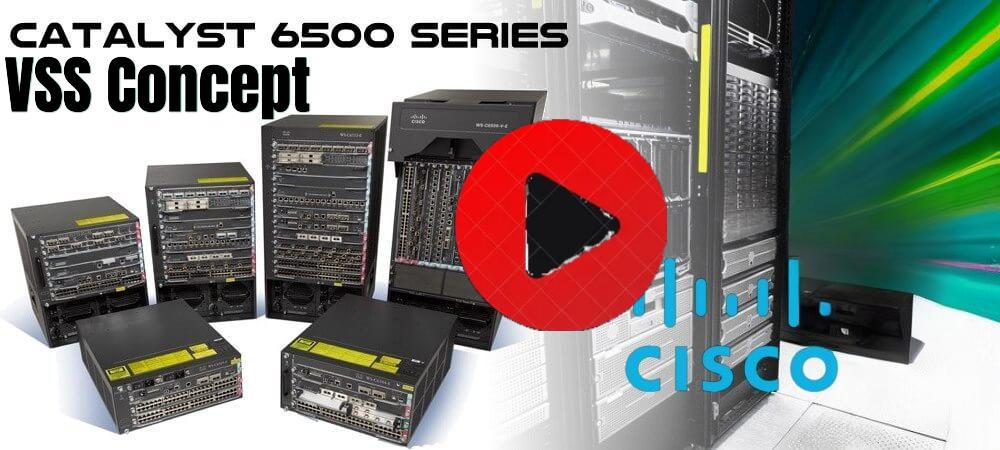
In this post, we take a practical look at Cisco Virtual Switching System (VSS) and how it applies to the Catalyst 6500/4500 platforms.
VSS lets you combine two physical chassis into one logical switch. The result is simplified Layer 2/Layer 3 design, higher availability, and the ability to use Multi-Chassis EtherChannel (MEC) so downstream devices can dual-home without STP blocking.
WHAT YOU WILL LEARN
- What VSS is and what it is not
- The core building blocks: VSL, active/standby roles, and control/data plane behavior
- Where VSS fits in modern designs and what to consider today (support status and alternatives)
- Practical deployment considerations, limitations, and validation steps
CORE IDEA
From a network design perspective, VSS turns two switches into a single control-plane entity. This can reduce spanning-tree complexity and improve convergence because port-channels can span both chassis.
DESIGN AND OPERATION NOTES
- VSL (Virtual Switch Link) is critical and must be designed with redundancy and adequate bandwidth.
- Software and hardware compatibility matter (supervisor engines, line cards, and feature support).
- Plan for failure domains: what happens when the VSL fails, when a chassis reloads, or during ISSU/upgrade scenarios.
WHEN TO USE IT (AND WHEN NOT TO)
VSS can be a great fit when you need chassis-level redundancy and simplified aggregation, but you should also evaluate modern alternatives depending on platform lifecycle and your target architecture.
WATCH THE VIDEO
If you prefer to follow the walkthrough step-by-step, watch the video here:
Cisco VSS Concept Explained (YouTube)